To document people and their struggles is one thing, but to take action and be involved with what is being documented is what’s actually effective. In Marco Williams’ film Banished, Williams does not just sit behind a camera and ask interviewees questions. Instead, he is in the frame when he interviews white citizens and makes his opinions known. When Williams speaks with Thom Robb, it is not just an interview, but it’s a conversation between the two of them. Even just seeing Williams speak with Robb and challenge his beliefs shows that he actually cares about making a difference for the descendants of the three cities.
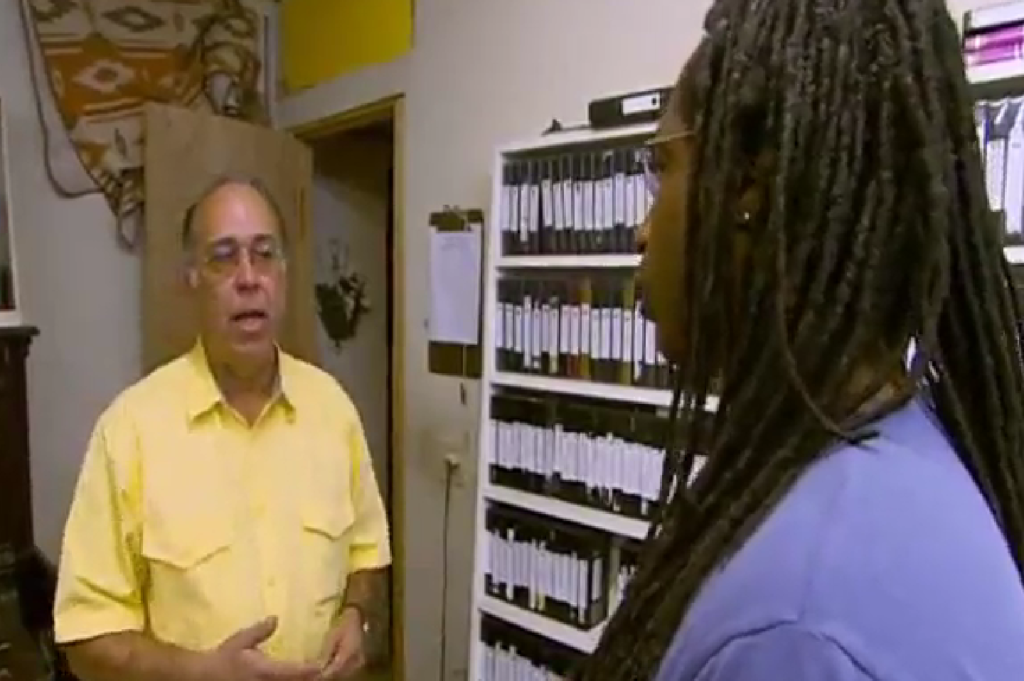
Thom Robb and Marco Williams, Banished (2007)
In Angela Aguayo’s book Documentary Resistance, she mentions, “One potential pitfall for social change documentary in practice is the tendency to embrace activism for the sake of access or institutional support, only to replace the important and difficult work of social change with a simple curation of images representing social injustice” (9). Instead of putting the families who were affected by the racial cleansings on display so people would feel bad for them, he showed himself and those families actually taking action when the white authority figures did not want to listen to them. This then communicates to the broader public that they were actually determined for change.

Leave a Reply