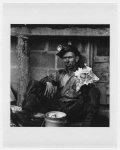
Family of Miners. Appalachian Coal Miner, Rogovin Milton, Library of Congress
“The documentary task troubled Agee enormously—some, reading him, might say needlessly. He reveals to us in the first pages of his book, the aesthetic, intellectual, and moral struggle he waged as he spent time with those fellow citizens, fellow human beings, then considered what to report of what he had witnessed” Coles (1-2)
Although mentioned very early in the reading, Coles talks about an important yet often forgotten aspect of doing documentary work: humanizing those who are being documented. It seems that many documentarians continuously fail to remember that those who they are studying are human beings as well, and oftentimes have complete disregard for their feelings. This idea is portrayed in Stranger with a Camera when a documentarian speaks with a Kentucky family. While asking about the family’s experiences they speak down to them and sort of mock them as well because of their lack of education and so on. So, Coles’ use of “fellow human beings” (1) reminds us that they are just that: fellow humans.
In addition, this idea also plays into the fact that documentary work can be exploitative. When Coles quotes Agee, “‘… to pry intimately into the lives of an undefended and appallingly damaged group of human beings’” (2) he reflects just how much documenting someone’s life can be an invasion of privacy, and/or make them look bad but have the documentarian benefit from it in the end. This is also shown through the Kentucky family in Stranger with a Camera; when the family was made to look very poor and uneducated as opposed to showing the good aspects that they probably had. And just as Agee called them, “undefended and appallingly damaged groups of human beings” (2), the family themselves and the people who they represented were in fact unable to defend themselves against the negativity brought upon them by the documentarians. As Elizabeth Barret mentions, she knew the rest of the world would view the Appalachian citizens exactly how the 1960s documentary portrayed them.

Leave a Reply